It's strange transitioning from a student into a writer. To call myself a writer feels pompous, cocky and strange, yet I can now acknowledge that this is what I want to do. I love to think about ideas and I want to share that love with others. The problem is the doing. The actual act of putting hands to the keys. I've recently filled yet another journal of hand written material, notes and reflections. This is all too familiar ground for me. I have stacks of these journals resting in the back of closets under beach towels and sweaters. But little good they do me until I type the words out and hit submit. Submit to who? This is the second trickiest part of this transition. How do you actually get published? I've been looking around at different online magazines and academic journals, and seeing the detailed submission requirements continuously makes me cower away. Yet the daydream remains, and over these years has been building momentum, the dreams are becoming insistent, compelling me forth to write. And here I am, expressing it here to get in the practice, establish a routine, to push myself past the uncomfortable fear of the unknown.
Anyone else going through this process? Advice for navigating this terrain?

Thursday, March 3, 2011

Monday, February 28, 2011
Modernizing Dreams
I've been reading a literary history of American modernism, weaving my way through the key figures and broad strokes of a past time and the culture those generations amassed in response. A response to the horrors of the First World War, that battleground of 'experience' and romantic adventure. And a nation churning its way into a new age, its vast land opened up and symbolically condensed in its network of urban centers, traveled with mechanical speed. A people wrenching in this turn, resistance in the nostalgia and convention of the past, the known and recognized codes and orders. Jubilation in the treasured fleeting Now, and wistful dreams of a new America. An art that wants to turn with a new lens, to show our dreams and fears to us.
The puzzle is getting harder to master, to piece these glimpses of orders and piles of details together into an understanding of the span. That world constructed and reconstructed in words. Those worlds. These novels seeking to recognize the splinters left after the War. wars. Those conflicts abroad and at home, en masse and individual. Henry Adam's multiverse. Freud's unconscious. Zelda's schizophrenia. They are moments of recognition in art of the variety of human experience, of consciousness, of feeling. They seek in their symbolic form to multiple the possibilities, adding new complexities to humanity's record.
The puzzle is getting harder to master, to piece these glimpses of orders and piles of details together into an understanding of the span. That world constructed and reconstructed in words. Those worlds. These novels seeking to recognize the splinters left after the War. wars. Those conflicts abroad and at home, en masse and individual. Henry Adam's multiverse. Freud's unconscious. Zelda's schizophrenia. They are moments of recognition in art of the variety of human experience, of consciousness, of feeling. They seek in their symbolic form to multiple the possibilities, adding new complexities to humanity's record.
Friday, January 28, 2011
Hidden Reality: Brian Greene's Parallel Universes
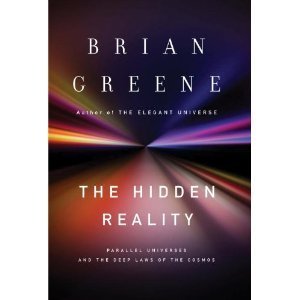
Watch the interview:
| The Colbert Report | Mon - Thurs 11:30pm / 10:30c | |||
| Brian Greene | ||||
| ||||
If Greene's theory is correct, what are these parallel universes like? Beneath his satire performance, Colbert asks a really crucial question, "how do you look outside of what is to you everything?" How do we examine alternative and outside universes when we, the observers, are positioned within a set and unquestioned sense of reality? How do we glimpse to the parallel, multiple, alternative universes potentially amongst us?
Friday, January 21, 2011
Refinished Cabinet: Before and After
Une Armoire Avant et Apres!
I found this cabinet outside of my apartment building in Brookline during the summer of 2009, right before my move to Blaine Street, and with my rapid accumulation of things that marks life after college, l I really needed extra storage.
Its past owner tried to paint the cabinet over with a blue acrylic wall paint, but since this has the infamous IKEA finish (veneer or lacquer) and they didn't sand it, the paint just peeled off in gooey strips. So, they tossed it.


Mine!
I went to work peeling off the blue paint and was left with a mostly white cabinet with some stubborn blue streaks and packing tape residue. And then, I admit, it sat for awhile. . . and awhile longer. After enough of Nate's gentle reminders, and a source of inspiration I set to work.
Tuesday, January 18, 2011
Sherry Turkle: The Effects of Technology
I saw this Colbert Report interview last night with Sherry Turkle promoting her new book, Alone Together. She raises great questions about our relationship to objects, especially the ways we interact with digital technology and how it affects our relationships with others. Watch the interview:
Side note: As a graduate student, I love what she says about "long form arguments."
Yesterday Tabitha and I talked about digital worlds and how humans interface with the artificial worlds of video and computer games. Tabitha raised the point that the digitalization of these game technology, such as Kinect which registers the body's movement and no longer requires a controller, creates a more open interface between the human user and the game. We are quickly seeing gaming systems, like Kinect and Wii Fit, adopt a more direct and 'natural' interface with the user, more seamlessly connecting to the user's natural body movements. There is something interesting about the bodily experience of playing these games, especially games through Kinect and Wii where you can watch your avatar self move along with you. What would it take for users to confuse this virtual self with their real selves? There are already reports of this reality confusion among gamers who play World of Warcraft, Second Life, or Sims to obsessive and addictive levels. Are there people would rather choose to immerse completely in their digital reality, what does this behavior look like, and what are the social effects of this human relationship to technology? This question is one in a series of many about our human relationship to objects, the emotional and bodily experience in these object interactions, and how it shapes our sense of ourselves and of reality.
| The Colbert Report | Mon - Thurs 11:30pm / 10:30c | |||
| Sherry Turkle | ||||
| ||||
Side note: As a graduate student, I love what she says about "long form arguments."
Yesterday Tabitha and I talked about digital worlds and how humans interface with the artificial worlds of video and computer games. Tabitha raised the point that the digitalization of these game technology, such as Kinect which registers the body's movement and no longer requires a controller, creates a more open interface between the human user and the game. We are quickly seeing gaming systems, like Kinect and Wii Fit, adopt a more direct and 'natural' interface with the user, more seamlessly connecting to the user's natural body movements. There is something interesting about the bodily experience of playing these games, especially games through Kinect and Wii where you can watch your avatar self move along with you. What would it take for users to confuse this virtual self with their real selves? There are already reports of this reality confusion among gamers who play World of Warcraft, Second Life, or Sims to obsessive and addictive levels. Are there people would rather choose to immerse completely in their digital reality, what does this behavior look like, and what are the social effects of this human relationship to technology? This question is one in a series of many about our human relationship to objects, the emotional and bodily experience in these object interactions, and how it shapes our sense of ourselves and of reality.
Monday, January 17, 2011
Let's craft!
I’m getting really into crafts these days. Making something new out of something old, used, out of materials found about my apartment. Maybe I’m just a hoarder, but I love to have interesting things around me. Nate and I want a pack rat home, a place where our friends can just idly gaze around and see lots of different objects that interest or inspire them. When I’m crafting I feel my creative imagination turn back on; its a bit rusty in these graduate school years of critical rigor.

These crafts sometimes feel silly in the face of the graduate work I do, but sometimes a girl just needs to make a pink paper flower for her stubborn hibiscus plant.

These crafts sometimes feel silly in the face of the graduate work I do, but sometimes a girl just needs to make a pink paper flower for her stubborn hibiscus plant.
3D TV: A Perfect World?
Though I have yet to experience it myself, it seems 3D Televisions are gaining ground in the market. Coming from my research in reader and audience relationship to the arts, I wonder, how does 3D Television affect viewers? How does the experience of watching TV shape our senses of the world, of ourselves, of our very realities? Since the content on 3D Television is largely the same as the 2D models- viewers are still watching football, Animal Planet, and sitcoms- it is the viewing experience of these seemingly 3-Dimensional images that differs. Will the new visual effect change the way viewers experience the representations on TV? Will it become more real for the viewers as Sony and Panasonic claim? And what would it mean to call the 3D television experience more real?
This commercial "Sony 3D: A Perfect World" from Sony Australia claims, like most 3D marketing, to deliver a world on TV not only as realistic as your actual life, but actually more real and even perfect. These are not unfamiliar claims; its almost cliche to note that advertisements are well known for over-the-top promises. But what happens when 3D TV delivers such realistic 3D representations of the world that viewers actually believe the representation is realer than the material world? In its artistic manipulation of reality, 3D Television can come closer to a perfect world; it can eradicate poverty, war, disease, environmental devastation simply by not showing it on TV. And if viewers buy this 3D TV reality, and immerse themselves into these fantasy worlds, what becomes of the rest of the material 'real' world? This is the futurist in me, projecting far ahead, imagining how the dystopian tendency could play out with this technology. I don't wish to make the reductive claim that 3D TV is an evil technology; as a TV and movie watcher, I embrace the progress in visual technology and love the immersive fun of 3D IMAX movies. But I do want to open up a conversation about 3D TV and film technology and how it affects us as viewers.
Shout out to The Morning Benders, the song in the commercial is "Excuses" from their album Big Echo. This is a great album.
This commercial "Sony 3D: A Perfect World" from Sony Australia claims, like most 3D marketing, to deliver a world on TV not only as realistic as your actual life, but actually more real and even perfect. These are not unfamiliar claims; its almost cliche to note that advertisements are well known for over-the-top promises. But what happens when 3D TV delivers such realistic 3D representations of the world that viewers actually believe the representation is realer than the material world? In its artistic manipulation of reality, 3D Television can come closer to a perfect world; it can eradicate poverty, war, disease, environmental devastation simply by not showing it on TV. And if viewers buy this 3D TV reality, and immerse themselves into these fantasy worlds, what becomes of the rest of the material 'real' world? This is the futurist in me, projecting far ahead, imagining how the dystopian tendency could play out with this technology. I don't wish to make the reductive claim that 3D TV is an evil technology; as a TV and movie watcher, I embrace the progress in visual technology and love the immersive fun of 3D IMAX movies. But I do want to open up a conversation about 3D TV and film technology and how it affects us as viewers.
On a sidenote, this post on Reddit is another instance in a greater trend on how our consumer culture understands the real. How do we gauge what is real? This is the bigger question that drives my research right now.
Shout out to The Morning Benders, the song in the commercial is "Excuses" from their album Big Echo. This is a great album.
Subscribe to:
Posts (Atom)